Distributor, franchise and wholesale territories open across north India

Exporting to United States

The United States is the largest buyer of Japanese ramune in the world, and ramune is the same bottle we make. That is the whole opportunity in one sentence. There is an American consumer who already buys marble soda from the Asian aisle, plus five million people of Indian origin who know the bottle by a different name. Nobody is currently selling them an Indian one.

Producing since
1984
Regulator
Food and Drug Administration, with Customs and Border Protection at entry
Entry ports
New York and New Jersey, Los Angeles and Long Beach, Savannah, Houston
Sea transit
Roughly 30 to 40 days to the east coast, 25 to 35 via the Pacific
Rollout phase
Phase 2

Clearing customs in United States

Everything below is the honest version. We would rather lose an enquiry now than lose a container at the port later.

Who decides

Food and Drug Administration, with Customs and Border Protection at entry. There is no product approval, but there is a real compliance stack. Our plant must be registered with the FDA. Every shipment needs prior notice filed electronically before arrival. And the importer must run a foreign supplier verification programme with a named agent physically in the United States.

What you must hold

  • FDA food facility registration for the Amb plant, renewed on the biennial cycle
  • Prior notice filed per shipment ahead of arrival
  • Importer’s foreign supplier verification programme and a US-based FSVP agent
  • Hazard analysis and preventive controls documentation the importer can inspect

How the label changes

  • American Nutrition Facts panel — the Indian panel is not accepted
  • Net contents in both fluid ounces and millilitres
  • Certified colours declared by their American names, not INS numbers
  • Country of origin statement
  • Ingredients in descending order using American naming conventions

Duty, excise and levy

Tariff on flavoured waters and soft drinks is low and charged per litre rather than as a percentage, so duty is rarely the deciding cost. Freight, the FSVP agent retainer and state container deposit schemes matter more. Ten states run bottle deposit programmes and glass is registered separately.

Verify the current tariff line and any state deposit obligations before quoting.

The one thing that catches people out

The certified colour. The synthetic yellow in the domestic recipe must be declared by its American name and is a live consumer issue in the United States. Every clean-label buyer will raise it in the first call. Have a natural colour answer ready or expect the conversation to end there.

Who buys this in United States

Marble soda has moved out of the specialist aisle into mainstream grocery over the last decade. The category is proven; the Indian version of it is not yet on the shelf.

Indian supermarket chains with fifty-plus store footprints

Pan-Asian grocery chains that already run a marble soda facing

Regional ethnic food distributors serving independent retail

Indian restaurant supply, and college town retail near large campuses

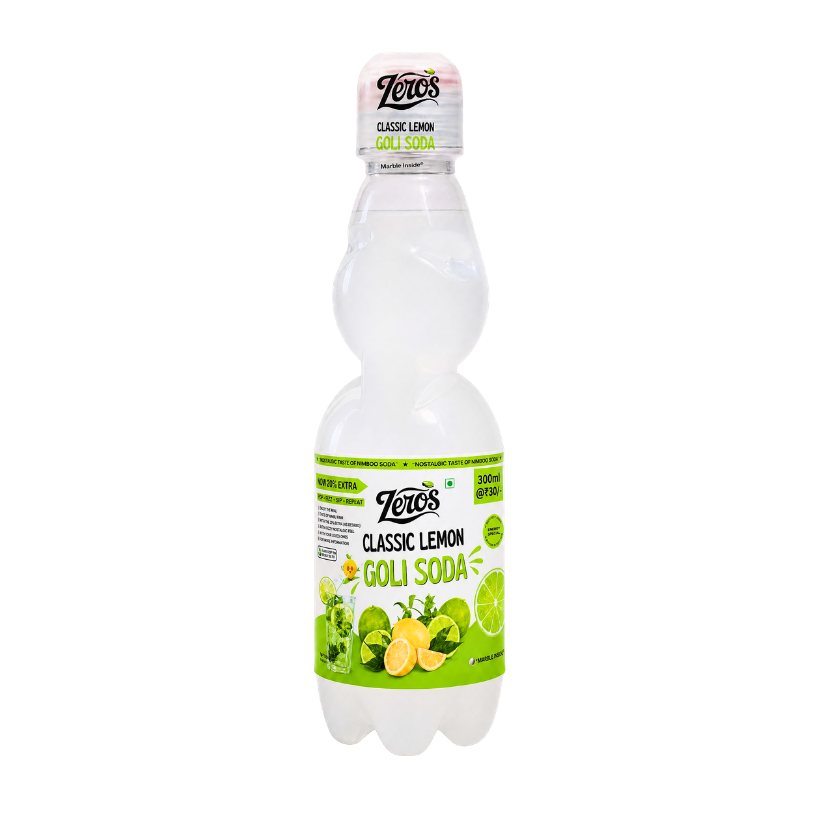
Zeros Classic Lemon Goli Soda 300 ml marble bottle for export to United States

What you are importing

A 300 ml lemon soda in a codd-neck glass bottle sealed by a marble — the same bottle sold worldwide as ramune, made in India where it has been called goli soda for a century. 12 bottles per crate, 6 months shelf life, produced under FSSAI licence 20926012000879.

It is not a new flavour asking a shopper to take a risk. It is a format that already sells in United States, in a version nobody there is currently supplying.

Trade clusters we quote to

Where the buying actually happens in United States, and how stock reaches each one.

New Jersey

Oak Tree Road in Edison and Iselin is the largest Indian commercial strip in North America, and it sits half an hour from the port. Shortest possible distance between a container and a shelf.

Edison · Iselin · Jersey City India Square · Parsippany — arriving through New York and New Jersey.

New York

Jackson Heights and Floral Park carry the retail, but New York’s real advantage is the pan-Asian grocery chains that already stock marble soda in its Japanese form.

Jackson Heights · Floral Park · Hicksville — arriving through New York and New Jersey.

Chicago

Devon Avenue has been the Midwest’s Indian high street for forty years, and the distributors on it supply five surrounding states. A slower market to open, very hard to lose once opened.

Devon Avenue · Schaumburg · Naperville — arriving through New York and New Jersey, then rail.

Houston

Hillcroft and Sugar Land serve one of the fastest-growing Indian populations in the country, and Houston is a port city, so stock arrives without a land leg.

Hillcroft · Sugar Land · Katy — arriving through Houston.

Dallas

Irving and Plano have grown a dense grocery cluster in under two decades, largely around technology employment. Younger buyer, more responsive to a new brand.

Irving · Plano · Richardson — arriving through Houston, then road.

San Francisco Bay Area

Fremont and Sunnyvale hold the highest-income Indian population in the country. This is the market where a premium glass bottle sells at a premium price rather than a value one.

Fremont · Sunnyvale · Milpitas · Santa Clara — arriving through Los Angeles and Long Beach, or Oakland.

Atlanta

Decatur and Gwinnett anchor the Southeast, and Savannah gives the region its own port. Less crowded than the coasts and rarely called on by Indian exporters.

Decatur · Gwinnett · Global Mall corridor — arriving through Savannah.

Enquire about United States

Tell us the volume, the channel and whether you already hold an import licence. We reply within one working day with a costed offer and a straight answer on certification.

We use your details only to answer this enquiry.

Importing into United States

Can you export goli soda to United States?

Yes. Sagar Beverages produces Zeros Classic Lemon Goli Soda under FSSAI licence 20926012000879 at our plant in Amb, Himachal Pradesh, and we ship to United States through New York and New Jersey. Roughly 30 to 40 days to the east coast, 25 to 35 via the Pacific once the container sails. Send an enquiry and we will come back with a costed offer, the certification position and a realistic first shipment date.

What certification do I need to import your drinks into United States?

There is no product approval, but there is a real compliance stack. Our plant must be registered with the FDA. Every shipment needs prior notice filed electronically before arrival. And the importer must run a foreign supplier verification programme with a named agent physically in the United States. In practice you will need: FDA food facility registration for the Amb plant, renewed on the biennial cycle; Prior notice filed per shipment ahead of arrival; Importer’s foreign supplier verification programme and a US-based FSVP agent; Hazard analysis and preventive controls documentation the importer can inspect. We supply the producer-side documentation for all of it. The importer-side registrations sit with you, and we will tell you plainly which is which before you spend anything.

What is the minimum order for United States?

We quote from one 20ft container as a standard first order, which is the point where sea freight per case stops being the dominant cost. Smaller trial quantities are possible by consolidation for buyers who want to test the market first. Tell us the volume you have in mind and we will tell you honestly whether it works.

Do you change the label for United States?

Yes, and it is not optional. American Nutrition Facts panel — the Indian panel is not accepted is required, along with the rest of the market's mandatory information. We produce a United States-specific artwork rather than stickering an Indian label, because stickered labels get rejected and they look exactly as cheap as they are.

What is the hardest part of importing this into United States?

The certified colour. The synthetic yellow in the domestic recipe must be declared by its American name and is a live consumer issue in the United States. Every clean-label buyer will raise it in the first call. Have a natural colour answer ready or expect the conversation to end there.

How long have you been manufacturing?

Since 1984. Over forty years making soda in north India, almost all of it in the unorganised trade where there are no contracts and no guaranteed shelf space — a shop reorders because the last case sold, or it does not. For a buyer in United States the relevant point is continuity: the risk in a first container is whether the supplier is still there for the fourth.

Can you produce under our own brand instead?

Yes. The codd-neck marble bottle is the part almost nobody else can supply, and we run it as private label as readily as we run it as Zeros. Read the private label page, or say so on the enquiry form and we will quote it that way.

Let us bring the classic to more places

Territories across north India are being allotted right now. Tell us where you sell and we will come back with pricing, margins and the current position in your area.

Message on WhatsApp