
Distributor, franchise and wholesale territories open across north India

Exporting to Australia

India is now the largest source of new migrants to Australia, and the grocery trade around Harris Park, Dandenong and Tarneit has grown up in barely fifteen years. It is a young trade with fewer entrenched suppliers than Britain, which means a new brand can still get a hearing. Climate helps too — a chilled lemon soda sells for more months of the year here than anywhere else on the list.

Producing since
1984
Regulator
Department of Agriculture, Fisheries and Forestry, against the FSANZ code
Entry ports
Melbourne, Sydney, Brisbane, Fremantle
Sea transit
Roughly 18 to 26 days from the west coast of India
Rollout phase
Phase 2

Clearing customs in Australia

Everything below is the honest version. We would rather lose an enquiry now than lose a container at the port later.

Who decides

Department of Agriculture, Fisheries and Forestry, against the FSANZ code. Imported food is inspected on a risk basis. A carbonated soft drink sits in the surveillance category, meaning a proportion of consignments are inspected rather than every one. Fail an inspection and the rate goes up until you clear a run of compliant shipments.
What you must hold

  • Compliance with the Australia New Zealand Food Standards Code
  • Importer registered in the integrated cargo system
  • Certificate of origin and packing declaration
  • Container deposit scheme registration as first supplier, per state

How the label changes

  • Nutrition information panel in the Australian format, per serve and per 100 ml
  • Country of origin labelling
  • Allergen declaration in the prescribed form
  • Additives by class name and INS number
  • Barcode registered against the container deposit scheme in each state of sale

Duty, excise and levy

Duty on soft drinks from India is low, and the India–Australia trade agreement reduces it further on a certificate of origin. The unbudgeted cost is the container deposit scheme: a refundable amount applies to each eligible container, the first supplier pays it, and every state runs its own registration.

Verify preferential rates under the trade agreement and per-state scheme fees before quoting.

The one thing that catches people out

Container deposit schemes. Every state runs one, each needs separate registration of the barcode, and the first supplier carries the cost. Importers who have not done glass before consistently forget this and then discover the margin is thinner than they modelled.

Who buys this in Australia

The fastest growing Indian population of any market on this list, concentrated in a small number of suburbs that behave like single large accounts.

Indian grocery chains across western Sydney and southeast Melbourne

Independent retail in Harris Park, Dandenong, Tarneit and Perth’s southern suburbs

Restaurant and catering supply

Cricket and festival event trade, which is seasonal but very large

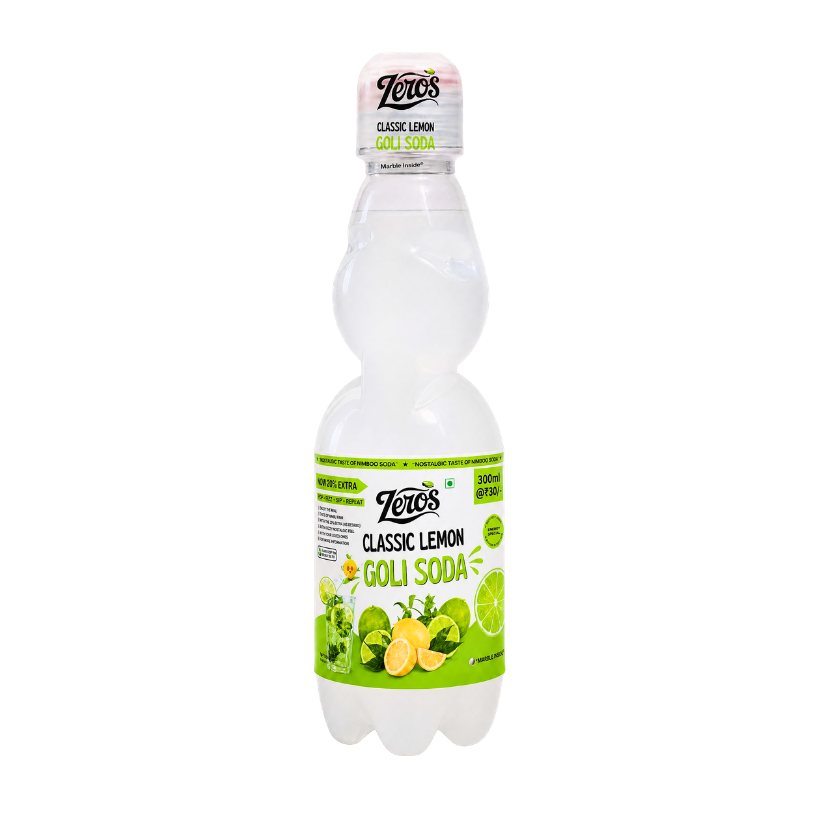
Zeros Classic Lemon Goli Soda 300 ml marble bottle for export to Australia

What you are importing

A 300 ml lemon soda in a codd-neck glass bottle sealed by a marble — the same bottle sold worldwide as ramune, made in India where it has been called goli soda for a century. 12 bottles per crate, 6 months shelf life, produced under FSSAI licence 20926012000879.

It is not a new flavour asking a shopper to take a risk. It is a format that already sells in Australia, in a version nobody there is currently supplying.

Trade clusters we quote to

Where the buying actually happens in Australia, and how stock reaches each one.

Sydney

Harris Park is called Little India for a reason, and the western Sydney corridor out to Blacktown and Parramatta holds most of the state’s Indian retail.

Harris Park · Parramatta · Blacktown · Wentworthville — arriving through Port Botany.

Melbourne

Dandenong, Tarneit and Point Cook have grown a new grocery trade almost from scratch in fifteen years. Fewer entrenched suppliers than Sydney, so a new brand gets heard faster.

Dandenong · Tarneit · Point Cook · Craigieburn — arriving through Melbourne.

Perth

Perth is the closest Australian port to India and the most isolated domestic market in the country, which means importers here buy direct rather than through the east coast.

Canning Vale · Southern River · Ellenbrook — arriving through Fremantle.

Brisbane

Smaller than the southern capitals but growing quickly, with a long hot season that extends the selling window for a chilled drink well past the national norm.

Sunnybank · Springfield · Runcorn — arriving through Brisbane.

Enquire about Australia

Tell us the volume, the channel and whether you already hold an import licence. We reply within one working day with a costed offer and a straight answer on certification.

We use your details only to answer this enquiry.

Importing into Australia

Can you export goli soda to Australia?

Yes. Sagar Beverages produces Zeros Classic Lemon Goli Soda under FSSAI licence 20926012000879 at our plant in Amb, Himachal Pradesh, and we ship to Australia through Melbourne. Roughly 18 to 26 days from the west coast of India once the container sails. Send an enquiry and we will come back with a costed offer, the certification position and a realistic first shipment date.

What certification do I need to import your drinks into Australia?

Imported food is inspected on a risk basis. A carbonated soft drink sits in the surveillance category, meaning a proportion of consignments are inspected rather than every one. Fail an inspection and the rate goes up until you clear a run of compliant shipments. In practice you will need: Compliance with the Australia New Zealand Food Standards Code; Importer registered in the integrated cargo system; Certificate of origin and packing declaration; Container deposit scheme registration as first supplier, per state. We supply the producer-side documentation for all of it. The importer-side registrations sit with you, and we will tell you plainly which is which before you spend anything.

What is the minimum order for Australia?

We quote from one 20ft container as a standard first order, which is the point where sea freight per case stops being the dominant cost. Smaller trial quantities are possible by consolidation for buyers who want to test the market first. Tell us the volume you have in mind and we will tell you honestly whether it works.

Do you change the label for Australia?

Yes, and it is not optional. Nutrition information panel in the Australian format, per serve and per 100 ml is required, along with the rest of the market's mandatory information. We produce a Australia-specific artwork rather than stickering an Indian label, because stickered labels get rejected and they look exactly as cheap as they are.

What is the hardest part of importing this into Australia?

Container deposit schemes. Every state runs one, each needs separate registration of the barcode, and the first supplier carries the cost. Importers who have not done glass before consistently forget this and then discover the margin is thinner than they modelled.

How long have you been manufacturing?

Since 1984. Over forty years making soda in north India, almost all of it in the unorganised trade where there are no contracts and no guaranteed shelf space — a shop reorders because the last case sold, or it does not. For a buyer in Australia the relevant point is continuity: the risk in a first container is whether the supplier is still there for the fourth.

Can you produce under our own brand instead?

Yes. The codd-neck marble bottle is the part almost nobody else can supply, and we run it as private label as readily as we run it as Zeros. Read the private label page, or say so on the enquiry form and we will quote it that way.

Let us bring the classic to more places

Territories across north India are being allotted right now. Tell us where you sell and we will come back with pricing, margins and the current position in your area.

Message on WhatsApp