
How goli soda is made
A plain-language journey from an inspected glass bottle to a carbonated drink sealed by its own marble. This is an educational overview; plant set-points and release criteria stay with the controlled production records.
Goli soda production combines beverage preparation with a reusable glass packaging process. Bottles are inspected and washed, the drink is prepared and carbonated, and the filled Codd-neck bottle is sealed when internal pressure seats its glass marble against the ring inside the neck. Finished bottles are coded, checked and crated.
What makes this line different
Most carbonated drinks receive an external closure after filling. A Codd-neck bottle carries its closure inside. The filling sequence has to leave the marble seated firmly enough to hold the gas, while the shaped neck must keep it away from the mouth after opening.
The bottle is also commonly part of a returnable system. That makes inspection, washing, rejection and crate handling central production steps rather than background packaging tasks.
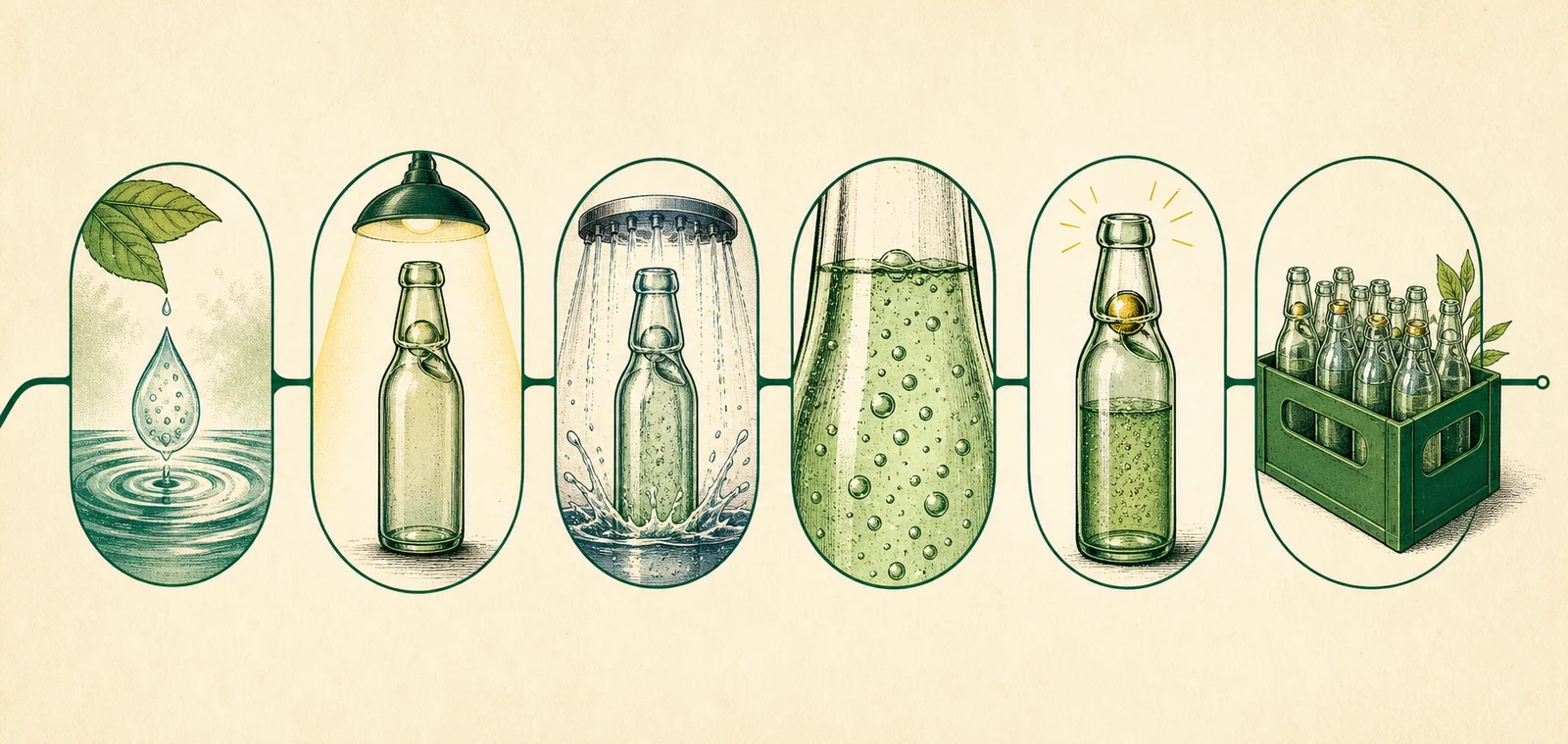
- 01
Water preparation
The drink starts with treated water. The exact treatment train and release measurements are plant-specific and should be read from the producer’s approved process records, not guessed from a generic article.
- 02
Bottle inspection
Returnable glass needs a visual rejection step before filling. Bottles with chips, cracks, foreign matter or damage around the marble neck must not continue through the line.
- 03
Bottle washing and rinsing
Accepted bottles move through the plant’s washing and rinsing procedure. Cleaning chemistry, contact time and checks belong to the controlled operating procedure.
- 04
Drink preparation and carbonation
The flavoured base is prepared and carbonated. For Zeros, the published product facts confirm a treated mineral-water base and a batch-level carbonation check before release.
- 05
Filling and the marble seal
The bottle is filled so carbonation pressure can seat the marble against the sealing ring. The neck geometry then holds the marble in its chamber after the consumer opens it.
- 06
Coding, inspection and packing
The finished bottle receives batch/date coding and a final pack check before it is placed in a crate for dispatch. The current Zeros label carries manufacturer, ingredient, nutrition and storage information.
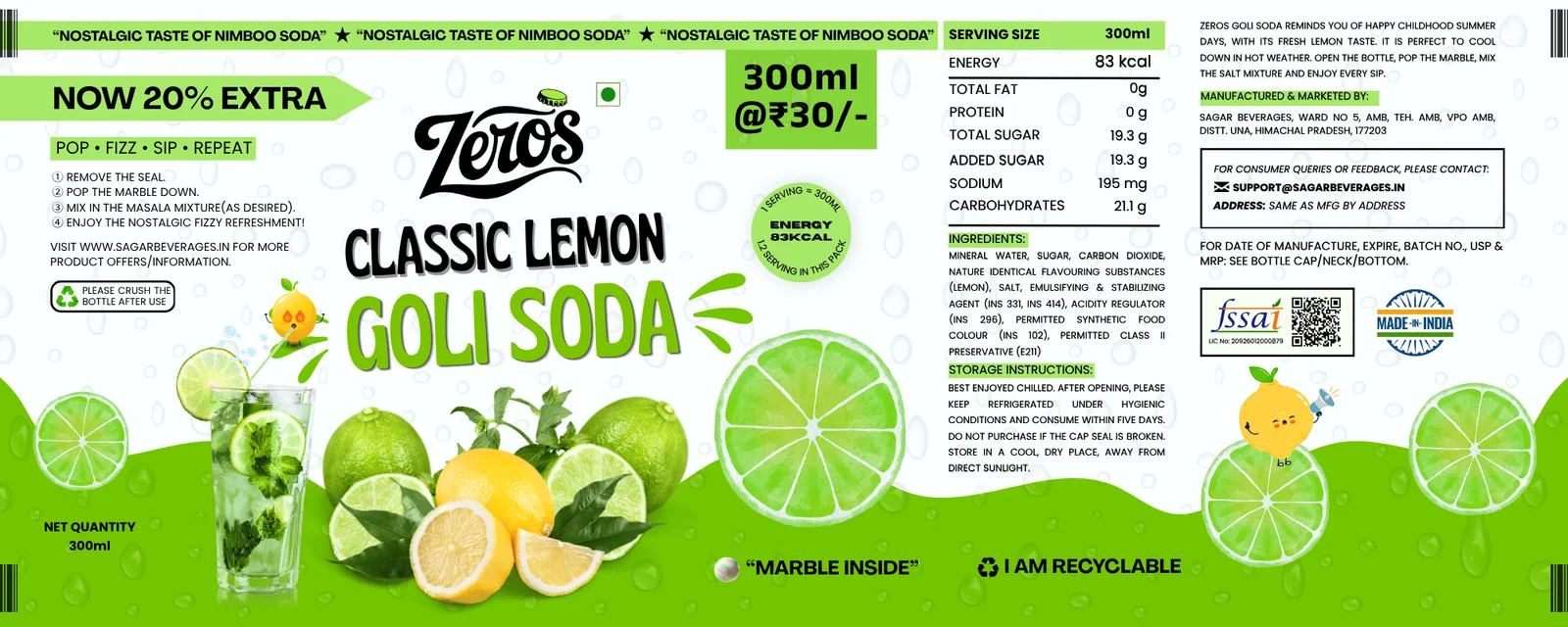
What the finished bottle declares
Zeros is manufactured by Sagar Beverages in Amb, District Una, under FSSAI licence 20926012000879. The label is the source of truth for ingredients, nutrition, net quantity and storage guidance. Batch and date coding identify the production run on the finished pack.
Evidence still worth adding
A real plant film will be stronger than another paragraph. The next media pass should capture the actual inspection, washing, filling, marble seal, coding and crate stages with an operations-approved transcript. No stock footage and no staged procedures.
Manufacturing process questions
How does the marble seal a goli soda bottle?
Carbonation pressure pushes the marble against an elastic sealing ring inside the neck. Pushing the marble away from the ring releases the seal and opens the bottle.
Are goli soda bottles reusable?
The glass format is commonly used in returnable systems, but reuse is only appropriate through a controlled collection, inspection and washing process. Consumers should not refill a commercial bottle at home.
Where is Zeros Goli Soda made?
Zeros Classic Lemon Goli Soda is manufactured by Sagar Beverages at Ward No 5, Amb, Tehsil Amb, VPO Amb, District Una, Himachal Pradesh 177203, under FSSAI licence 20926012000879.
Does this page publish factory pressure, temperature or cleaning set-points?
No. This is a plain-language process overview. Operational limits and verification records belong to the plant’s approved procedures and should not be invented for marketing content.
Let us bring the classic to more places
Territories across north India are being allotted right now. Tell us where you sell and we will come back with pricing, margins and the current position in your area.